Pirate Radio
Across Britain, unlicensed and specialist broadcasters moved new records, built DJs and MCs, sold raves, carried local voices and kept underground culture alive between the weekends.
Black music built the radio culture
Rave pirates did not invent this from scratch. Black British radio had already spent years doing what the mainstream mostly would not: playing reggae, soul, funk, jazz-funk, electro and hip-hop, talking directly to local communities and putting specialist music on air because nowhere else was doing it properly.
Names including Invicta, DBC, LWR, Horizon, Solar and JFM helped establish the practical culture: studios in flats and back rooms, transmitters on rooftops, specialist DJs, phone-ins, dedications and strong local identities. Ranking Miss P’s work on DBC — and later at the BBC — also makes clear that this history was never exclusively male.
Kiss began as a pirate in 1985, with figures including Norman Jay helping turn specialist Black music and emerging house culture into a city-wide radio community. By the time acid house kicked off properly after 1987 the basic pirate machinery was already there: people who knew how to get a signal out, shops feeding DJs records, callers waiting for shouts and listeners who already knew how to hunt around the FM dial for the good stuff.
 ▶
▶
The foundations before rave arrived
Rodney P’s documentary belongs here because rave and jungle radio did not appear from nowhere. The methods, communities and broadcasting culture were already being built.
Radio made rave continuous
The rave finished in the morning, but the scene did not. Pirate radio carried it through the week — new tunes, MCs, adverts, phone numbers, gossip, arguments, shout-outs and the next event. By Friday night you already knew what was bubbling.
Stations that helped shape the rave years
Different stations mattered at different times and in different neighbourhoods. These are not rankings — they are some of the names that repeatedly surface when the history is told through tapes, flyers, DJs and listeners.
Centreforce
One of the defining names around London’s acid-house period, remembered for bringing new house and rave records onto FM while the warehouse scene was still exploding.
Weekend Rush
A key hardcore and jungle-era name whose surviving broadcasts preserve the rush of pirate radio as music, MCing, adverts and local information all collided on air.
Dream FM
Dream FM became part of the hardcore-to-jungle radio landscape, with DJs and MCs using the station as a weekly space for new records and rave culture between events.
Don FM
Another important London name from the early-90s dial, carrying rave and breakbeat music through the period when hardcore was splitting into new directions.
Eruption FM
Eruption became part of the jungle-radio network that made unreleased music, fast-moving DJ styles and local MC culture audible outside the rave itself.
Rude FM
Rude FM belongs to the longer jungle and drum & bass radio story, carrying the music through changing eras while keeping the specialist-station mentality intact.
Jungle found a broadcast home
Kool deserves a big chapter because for jungle heads it was one of those stations you went looking for on purpose. But it was never the whole dial, and the wider pirate story matters just as much.
Kool was a room without walls
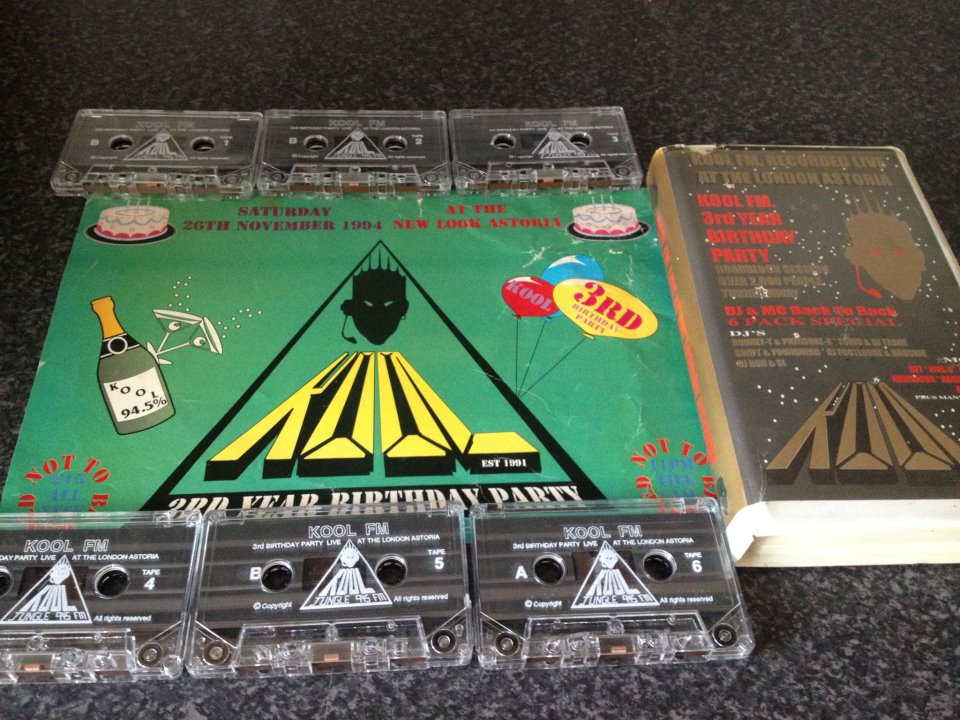
Founded by Eastman and Smurff, Kool FM put jungle right at the centre while the music was still finding its name. DJs brought dubplates, MCs worked the phones and the room, rewinds told you instantly which tune had just done damage, and the adverts told you where half the same people would be that weekend.
A Kool tape was never just a clean DJ mix. You got unreleased tunes, dedications, laughter, mic chatter, adverts, dodgy levels, the occasional technical wobble and somebody shouting out your estate. That mess is part of why the tapes still feel alive.
Rave Archive UK has particularly strong surviving Kool material, so the station naturally has a larger footprint in the archive. That depth should be used as a strength without allowing the wider UK network to disappear behind it.
 ▶
▶
Inside Kool FM and Dream FM
Studios, transmitters, DJs, MCs and listeners appear while jungle is still a living contemporary culture — useful precisely because it shows more than one station at work.
A working map of the UK dial
London has the densest surviving trail, but rave radio was not confined to the capital. Different towns and cities built their own specialist networks, often with far less surviving material.
London
From acid house into hardcore, jungle and later underground music, the capital supported an unusually dense pirate ecosystem.
Midlands
Birmingham and Leicester had their own Black-music, rave and jungle broadcast traditions rather than simply relaying London’s culture.
North West
Manchester and Liverpool built specialist radio routes around house, rave and club culture, later feeding into licensed regional dance radio too.
Yorkshire
Leeds, Sheffield, Bradford and the surrounding cities had their own rave and electronic-music culture, with local radio part of that infrastructure.
Bristol & South West
Sound-system culture, house, hardcore and jungle all fed local specialist stations in Bristol and the surrounding region.
East Anglia
Norwich and the wider eastern rave circuit also supported specialist broadcasting and local tape circulation.
Scotland
Scottish rave developed its own identity, and local radio and later licensed dance broadcasting helped carry that culture between clubs and cities.
Northern Ireland
Dance broadcasting in Northern Ireland developed through its own local conditions, pirate activity and later specialist commercial stations.
National specialist radio
Once rave music broke into legal broadcasting, specialist shows helped move underground sounds into a national conversation.
How pirate radio physically worked
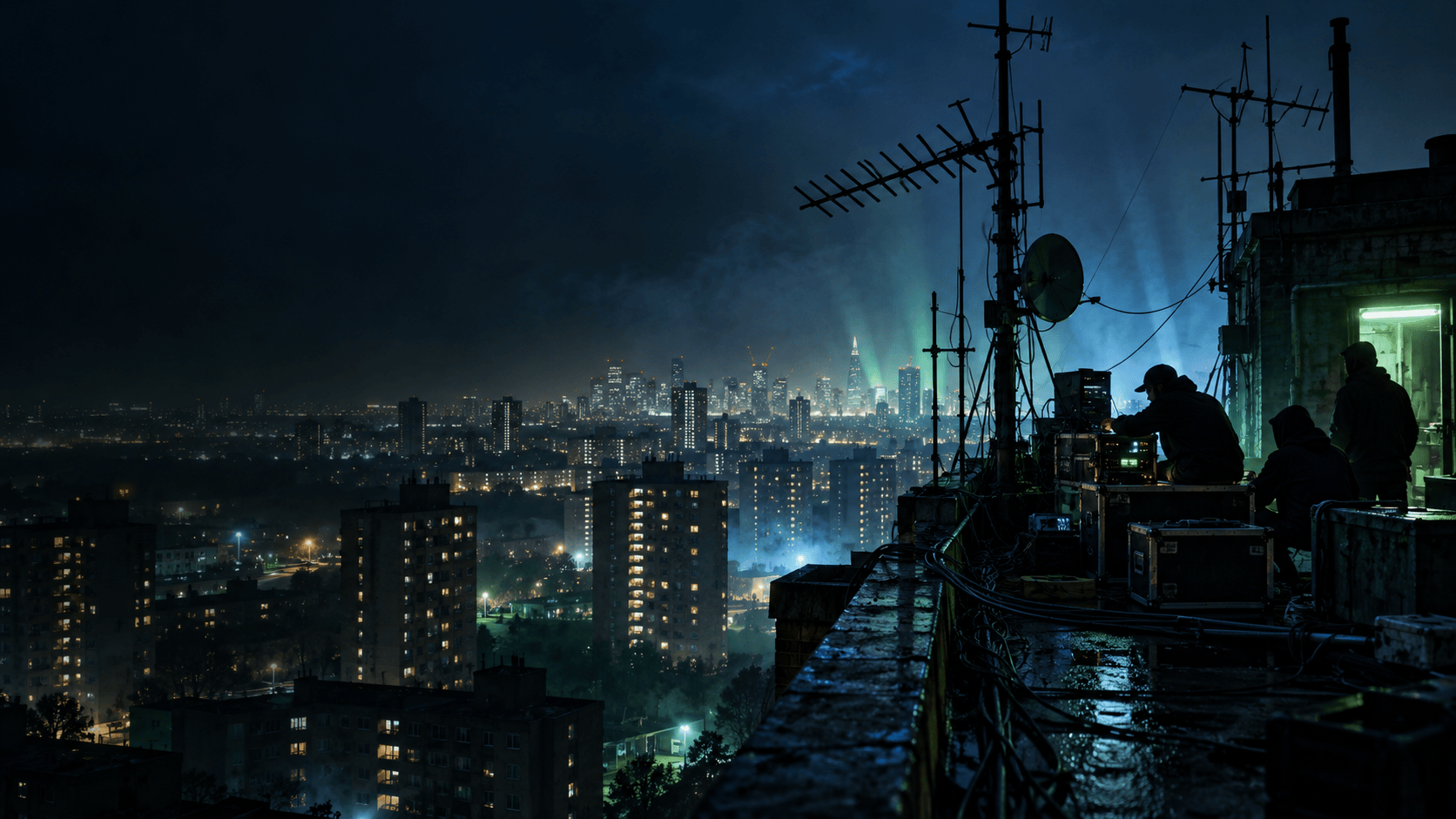
None of it happened by magic. Somebody had to build the link, get the rig up high, keep the transmitter alive and get it all working again when something went wrong. No engineer, no signal. No signal, no station.
 ▶
▶
Hidden studios and rooftop transmitters
The technical story becomes visible here: how crews separated studio from transmitter, improvised equipment and rebuilt after faults or enforcement.
Pressure changed the method, not the demand
Enforcement, licences and mainstream recognition all changed pirate radio, but none removed the audience’s need for specialist broadcasting.
Unlicensed broadcasting risked equipment seizure, fines and prosecution. Crews separated studios from rooftop transmitters, moved sites and treated replaceable equipment as part of operating life. That resilience should not romanticise the real physical danger of rooftops, improvised power and enforcement.
Kiss received a legal London licence and launched officially in 1990. Pete Tong’s Essential Selection began in 1991, the Essential Mix in 1993 and One in the Jungle in 1995. Regional dance broadcasters such as Kiss 102, Galaxy and later Beat 106 showed how far the audience had grown.
Mainstream recognition did not make pirates redundant. Licensed schedules and advertising requirements could not always react with the same speed. New genres and presenters continued to emerge from stations operating closer to their communities.
 ▶
▶
Weekend Rush and the practical reality
Period footage of broadcasting outside the legal system sits naturally beside the enforcement chapter: studios, risk, records and the reason listeners kept tuning in.
A temporary signal, a lasting tape
Most pirate broadcasts were never intended to survive. Home recording changed that.
A C60 or C90 could catch an unheard dubplate, a rave advert, a phone-in, a shout to somebody you knew, a transmitter wobble or an MC mentioning exactly what was happening that weekend. The hiss, retuning and sudden endings are not always things to clean away — that is how we heard it.
That is why Pirate Radio and Tape Culture sit side by side here. Loads of these shows only exist now because somebody stuck a blank tape in the deck and pressed record at the right moment.

Search the whole radio network
The archive search now treats pirate radio as a network rather than a Kool FM synonym. Rave Archive UK and Dizzyuk recordings appear first, then matching broadcasts from across Mixcloud.
UK Pirate Radio
Search across Kool FM, Dream FM, Weekend Rush, Don FM, Eruption, Centreforce, Unity, PCRL and broader UK pirate-radio terms, with station filters generated from the recordings actually found.
The dial was bigger than any one station.
Kool was massive, but every area had its own frequencies, crews and favourites. The real story is the whole dial — the stations, engineers, DJs, MCs and listeners who kept rave moving all week until it was time to go out again.
