Mallorca Lee
Scotland had its own rave language, its own rooms and its own heroes. Mallorca Lee helped make that identity impossible to ignore — all live energy, hard machines, huge hooks and a lifelong refusal to treat rave as something that had finished.
Hip-hop attitude, acid-house possibility
The Ultra-Sonic story did not begin with a chart position. It began with a teenager trying to work out how records were made and discovering, through rave, that he did not need permission to make one.
Mallorca Lee’s earliest musical obsession was hip-hop. Run-DMC and Public Enemy mattered not only for the records but for the force of the performance. By the end of the 1980s acid house had shifted the ground beneath him. In later interviews he described being pulled away from hip-hop and into dance culture by the feeling that the new scene made anything seem possible.
The decisive moment came when he saw Adamski play live in 1990. Lee later remembered taking out a bank loan and buying an Ensoniq ESQ-80 synthesizer/sequencer and an Alesis SR-16 drum machine, then learning by doing. There was no tutorial culture and no established route into production around him. The DIY lesson was the point: a handful of machines, an idea and enough nerve could become a live act.
He found his partner in Rodger Hughes, a schoolteacher connected to Lee’s family who shared his interest in synthesizers and house music. Ultra-Sonic formed in Ayrshire in 1991. Lee later described the formula neatly: the attitude of Public Enemy meeting the house and rave influence of Adamski and N-Joi. That combination helps explain why Ultra-Sonic never felt like a studio project politely reproducing what DJs were already playing. The act was built to hit a rave as a performance.
By 1993 that energy had carried Ultra-Sonic onto the Fantazia Big Bang stage. The surviving film catches the act inside the period itself, with Mallorca Lee working the front of the stage as producer, MC and live performer.
Clubscene became central to the recorded story. Ultra-Sonic’s records crossed hardcore techno, rave, trance and the increasingly melodic end of Scottish happy-hardcore culture without sitting comfortably in only one box. Obsession reached number 75 on the UK singles chart in 1994; Do You Believe in Love? reached number 47 in 1996. The albums Tekno Junkies and Global Tekno also reached the UK albums chart, with Global Tekno peaking at number 58.
The chart numbers only describe one side of it. Tracks such as Annihilating Rhythm, Obsession, Make That Move, 1,2,3,4 — Tic Toc and Do You Believe in Love? became part of the working vocabulary of Scottish rave. Ultra-Sonic travelled beyond Scotland as well, but the act’s importance at home was deeper than export success: they sounded like a scene becoming confident in its own identity.
Lee never separated the studio from the rave. He later explained that he wrote with a big system in mind, tried ideas out through DJ sets and live shows, then took what the crowd and the room taught him back into the production. That loop — machine, record, system, crowd, back to the machine — is all over Ultra-Sonic. The builds are not theory; they are written by somebody who knew how long a packed room would let you hold the tension before it wanted the drop.
When the original Ultra-Sonic period ended in the late 1990s, Lee moved into Public Domain. The group’s Operation Blade (Bass in the Place) reached number five on the UK singles chart in 2000. It was another remarkable crossover, taking hard-edged club energy into the national Top 10 without sanding off the impact that made it work in the first place.
Lee did not settle into nostalgia after that breakthrough. He continued as a DJ and producer, worked under names including Don’t Delete, G-GO and Red Monkey, and moved through trance and techno as his own productions developed. His solo work and collaborations put him alongside the later Scottish trance generation while keeping a direct line back to the early rave years.
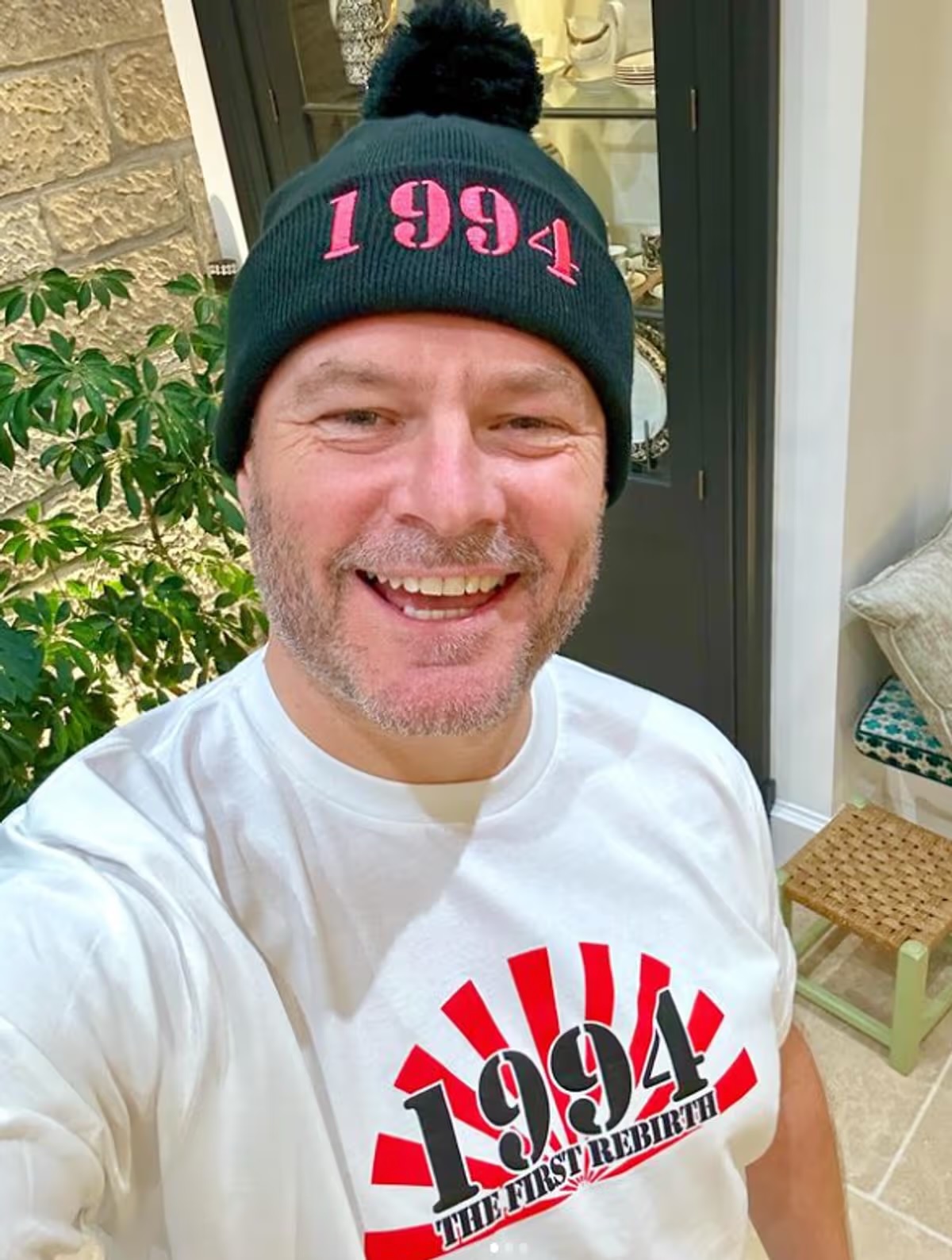
Then he did something equally important later in life: he turned remembering into an active part of rave culture. His 1994 nights began in 2013 and were built around what he called rave’s golden year. These were not museum displays. Original artists returned, old records were played at full volume and the crowd was invited to use memory as fuel for another night out. He also ran the Legends nights because, as he put it, he wanted to hear the DJs who had formed the soundtrack to his own youth.
The XL podcast extended that instinct into conversation. Across the series Lee sat down with DJs and artists to talk through their journeys in electronic music. In a culture where so much history survives in fragments, flyers and memories, those long conversations became another way of keeping the stories alive.
In January 2024 Mallorca Lee announced that he had been diagnosed with terminal cancer. He died on 4 February, aged 51. The speed of it shocked a scene in which he had remained unusually visible: still promoting, still talking, still making music and still treating rave as something people did together rather than something that had finished decades earlier.
That is why Mallorca Lee belongs here. He was not simply a member of a successful rave act. He helped make Scottish rave sound like itself, carried that energy into a national chart crossover, then spent his later career making sure the people and music that built the culture kept meeting each other.
Mallorca Lee in frame
The photographs keep the focus where it belongs: on the performer and DJ who spent his life facing the crowd rather than standing outside the culture looking in.
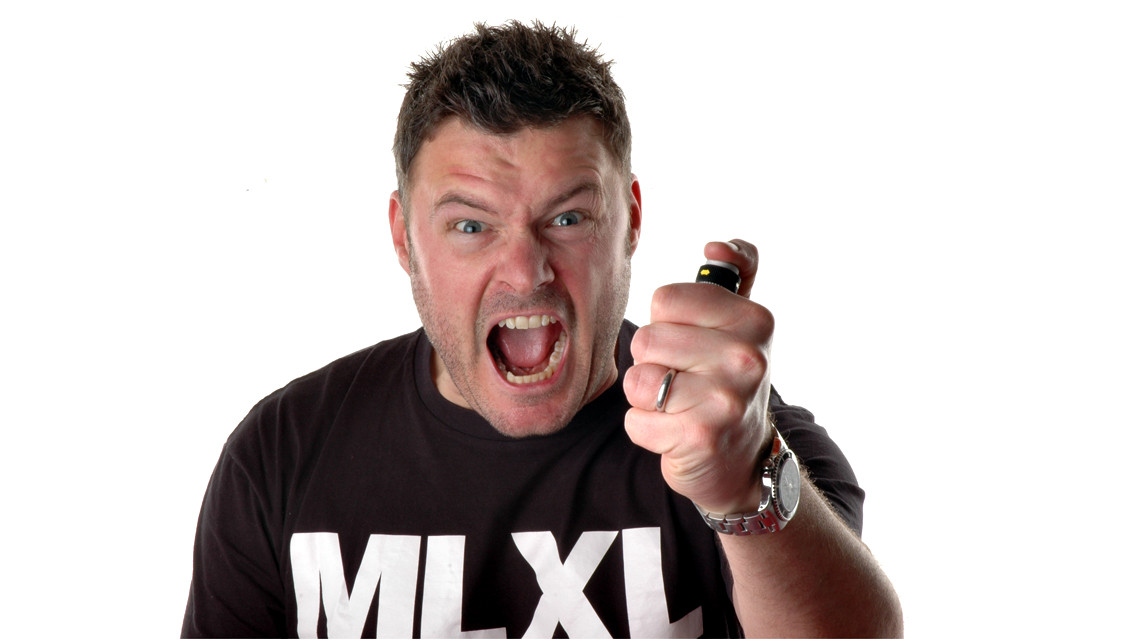 Mallorca Lee.
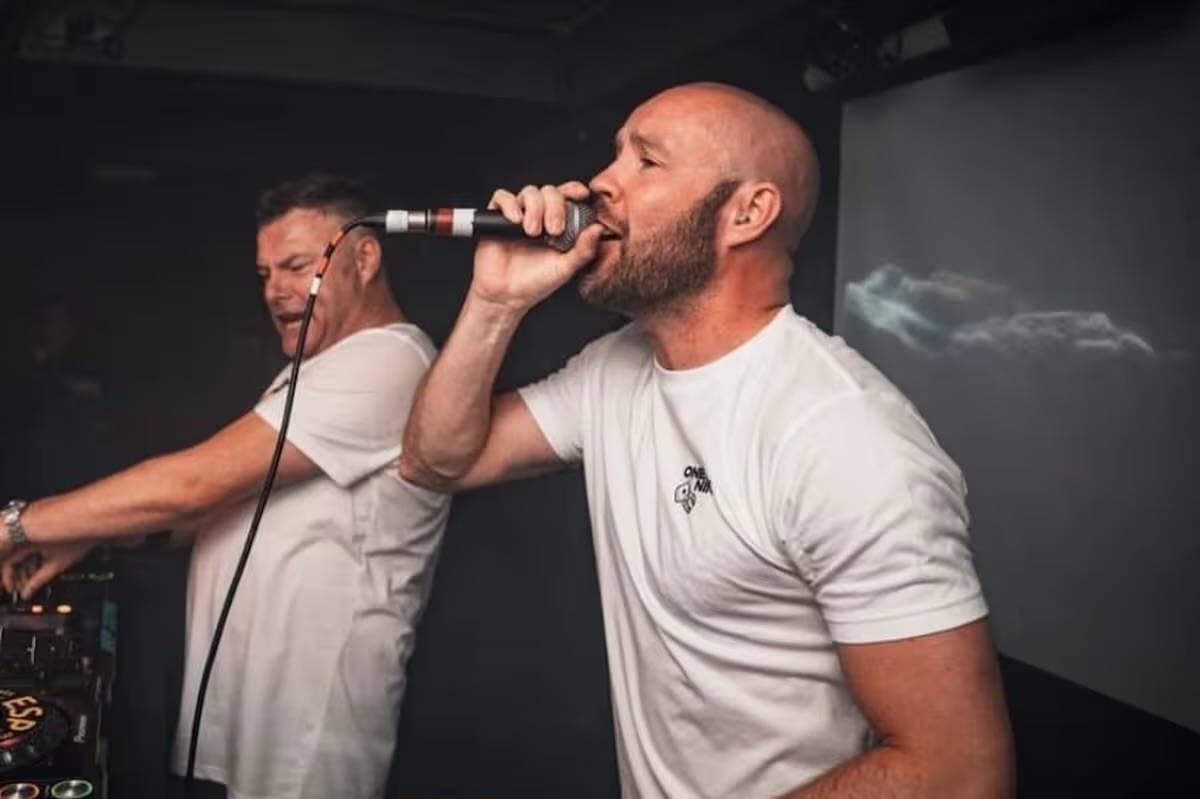 Mallorca Lee.
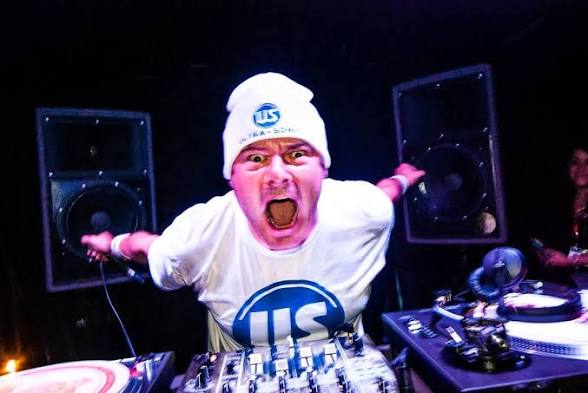 Mallorca Lee.
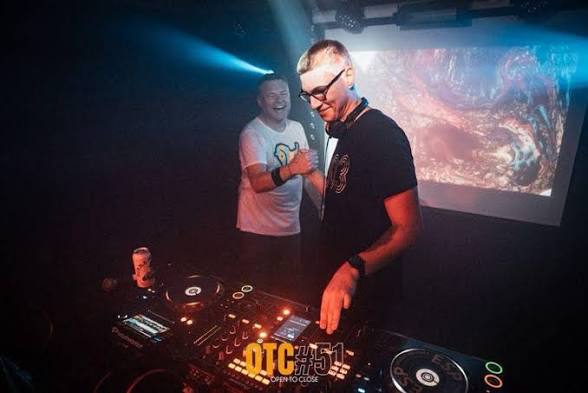 Mallorca Lee.
One career, several rave generations
Learning in public
Adamski proves the DIY idea, Mallorca and Rodger Hughes form Ultra-Sonic, and the act goes from bedroom machines to the Fantazia stage.
Clubscene & Ultra-Sonic
Hardcore techno, rave hooks, charting singles and albums turn Ultra-Sonic into one of the defining names of Scotland’s 1990s rave identity.
Public Domain & solo years
Operation Blade reaches the UK Top 5, followed by solo production, trance, techno, aliases and collaborations that keep Lee moving rather than repeating himself.
1994 & the memory circuit
Old-skool reunion nights, Ultra-Sonic returns and long-form interviews turn memory into an active rave community rather than a closed chapter.
The records reached beyond Scotland
Official chart data gives the crossover scale without confusing chart success with the deeper influence the records had inside rave.
Mallorca Lee behind the decks
A later live set keeps the DJ side of the story audible alongside the Ultra-Sonic and Public Domain footage.
A full live set from Mallorca’s later DJ years, linking the original rave energy to the trance and hard-dance chapters that followed.
Ultra-Sonic on stage and on screen
Watch stays for genuine moving footage. Mallorca was a live rave performer as much as a producer, and these clips show that story from Fantazia through Ultra-Sonic, Public Domain and the later return.

Ultra-Sonic inside the rave years themselves, with Mallorca Lee right at the front of the stage.

One of the records most closely tied to the act’s hardcore-techno identity and the Lee/Hughes partnership.

The Scottish rave anthem that pushed Ultra-Sonic out beyond the home crowd and into the UK chart.

The act’s highest-charting UK single, with the big hooks still carrying proper rave energy.

The next chapter: hard club music smashing its way into the UK Top 5 without losing the pressure.

Old rave connections still making new noise rather than just trading on the memories.
Follow the rave around him
He kept treating rave as a living thing
There are artists whose legacy is a handful of essential records. Mallorca Lee left those, but his contribution is larger because he remained involved in the social life of the music.
Ultra-Sonic helped give Scottish rave a recognisable voice at a moment when the scene was becoming increasingly regional and increasingly confident. Public Domain proved he could move into a new era and still reach a mass audience. His solo work refused to freeze in 1994.
And then, years later, he brought people back into rooms under the 1994 banner not to mourn the past but to rave to it again. That instinct — records, people, stories, another night together — is why old-skool rave still feels alive rather than finished.
More on Mallorca Lee
Love, noise and one more rave.
Mallorca Lee spent more than three decades proving that rave could change shape without losing its reason for existing: people, records, energy and the urge to make something happen yourself.
Return to the Hall of Legends →