
Richie Hawtin
Raised on the Canadian side of the Detroit River, Hawtin absorbed techno from close enough to feel it but far enough away to rebuild it his own way — Plus 8 pressure, Plastikman acid and a lifelong obsession with turning DJ equipment into an instrument.
Techno from the other side of the river
Windsor sits across the Detroit River from the city that created techno. Hawtin’s career grew out of that geography: close enough to hear the future, outside enough to build his own response to it.
Richie Hawtin was born in Oxfordshire in 1970 and moved with his family to Canada when he was nine. He grew up in the Windsor area, across the river from Detroit, with an engineer father whose interest in electronics made machines feel less mysterious than they did to most children.
The decisive musical signal came from Detroit radio. Hawtin has repeatedly credited Jeff Mills’ late-1980s broadcasts and the city’s techno scene with giving his interests in computers, electronics and club music a direction. Windsor dancers could cross the border into Detroit clubs; Detroit records could cross back with them.
The scale was still properly underground. Hawtin remembers clubs like The Shelter and the Music Institute holding only a couple of hundred people. That is useful context when the Detroit story gets retold as though techno arrived fully formed as a global movement. He was crossing the river into small rooms, hearing new records close to source, then carrying the shock of them back into Windsor.
In May 1990, Hawtin and John Acquaviva launched Plus 8 Records. The idea was basic in the best underground sense: the Detroit artists they admired had their own labels, so if these two wanted their version of the music heard outside Windsor, they needed one too. The first official release, States of Mind — Elements of Tone, arrived on 1 May 1990 and the label quickly became a Canadian home for increasingly hard, futuristic techno while maintaining direct contact with Detroit.
That outsider position became part of the sound. Hawtin later described his music as a hybrid — Detroit in its foundations, but with an international perspective because he was never completely inside the city. For ravers this border logic makes perfect sense: scenes travel through radio signals, car journeys, record bags and the people stubborn enough to bring something back across town — or in this case, across a country line.
Hawtin recorded as F.U.S.E., with Dimension Intrusion appearing in 1993 as part of Warp’s Artificial Intelligence series. The same period produced the identity that would define him most strongly: Plastikman.
The hardware was not abstract gear worship. Hawtin has described switching on John Acquaviva’s TR-909 and suddenly recognising the frequencies and rhythmic language he had been hearing in Detroit records. That moment of machine recognition fed directly into the early Plus 8 and Plastikman vocabulary: fewer parts, more pressure, and tiny changes made enormous on a club system.
Sheet One, released in 1993, reduced acid techno to something stark, spacious and almost hallucinatory. Hawtin later described the crucial studio moment as pairing a Roland TR-606 with the TB-303 and pushing the acid line into a longer, more cerebral form. The infamous perforated blotter-style artwork made the album visually inseparable from the psychedelic idea.
Musik in 1994 pushed the concept further while retaining enough pressure for the dancefloor. Plastikman’s early live environment — including a black-vinyl-covered room in Detroit’s derelict Packard Plant — treated performance, space and visual identity as one system rather than a conventional DJ show.
By 1998, Hawtin deliberately stepped back from the expanding business machinery around Plus 8 and launched M_nus. The subtraction was musical as well as organisational. Consumed stripped techno toward delays, reverbs, negative space and what Hawtin called an “architecture of sound.”
His DJ work was undergoing an equally radical change. Decks, EFX & 909 treated the Roland drum machine and effects as extensions of the turntables; DE9: Closer to the Edit in 2001 broke more than 100 tracks into loops and fragments, making a mix album function like a new composition assembled from microscopic pieces.
The technology followed the idea. Hawtin and Acquaviva became early supporters and testers of Final Scratch, the system that let DJs manipulate digital audio files with time-coded vinyl. Hawtin did not invent the underlying concept, but he helped road-test and shape it into something working DJs could actually use.
That involvement helped normalise the laptop in the DJ booth. Hawtin then pushed further through Ableton-based performance, customised mixers, Traktor collaborations and later hardware projects. The point was rarely technology for its own sake; he wanted more tactile control over recorded sound than two finished records could provide.
Moving to Berlin in the mid-2000s placed Hawtin at the centre of the minimal-techno revival, while M_nus developed artists including Magda, Marc Houle and Troy Pierce. Later concepts such as ENTER. in Ibiza and From Our Minds continued the pattern of treating an event as a complete technological and cultural environment.
Richie Hawtin’s importance to Rave Archive UK is therefore twofold. Musically, Plastikman helped define minimal and acid techno. Technically, Hawtin repeatedly changed what DJs thought they were allowed to touch inside a finished record. The set became less like playback and more like live editing.
Reduce the music, expand the control
Plus 8 & F.U.S.E.
Windsor and Detroit form one regional techno ecosystem while Plus 8 gives Hawtin an independent outlet.
Plastikman
Sheet One, Musik and Consumed push acid toward minimalism, space and psychedelic repetition.
M_nus & DE9
Minimal records and increasingly digital DJ systems turn subtraction into both a sound and a working method.
Technology as instrument
Custom mixers, software, immersive events and From Our Minds continue the obsession with live control.
Richie Hawtin in frame


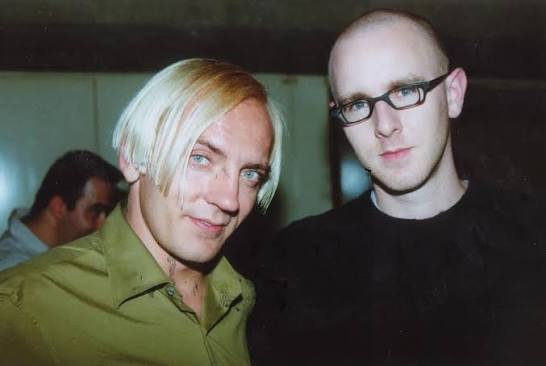
1995 to digital fragmentation
Richie Hawtin on film
A full filmed Boiler Room set showing Hawtin’s hybrid DJ approach in practice rather than as audio-only archive material.

The DJ booth became a laboratory
Hawtin’s technological influence is easy to reduce to gadgets, but the deeper idea is musical: a finished track does not have to remain finished once it enters the set.
Plastikman reduced techno to its smallest useful gestures; DE9 and Final Scratch did something similar to DJing, breaking records into controllable fragments and making the mix itself an act of composition.
