


Kevin Saunderson
Kevin Saunderson carried Detroit’s machine music onto dancefloors and pop charts, connecting underground techno to the vocal power of Inner City without losing its Detroit core.
Why Kevin Saunderson matters
Kevin Saunderson was born in Brooklyn, but Detroit became home after his family moved to Belleville, Michigan while he was young. There he attended school with Juan Atkins and Derrick May. The three later became known as the Belleville Three, developing their interests through shared records, Detroit radio and increasingly direct engagement with electronic music.
The Electrifying Mojo was part of that education, just as he was for Juan. Kraftwerk, funk, new wave, Prince and electronic records could all turn up in the same radio universe. Juan was the one already furthest into making music, and Saunderson has credited him with helping open the door to production. Before long Kevin wasn’t only listening and DJing — he was learning what the machines could do.
Deep Space, the DJ collective around Juan, Derrick and Kevin, gave them somewhere to develop their ears and their own identity. But Saunderson’s first records quickly showed he wasn’t going to sound exactly like either of his mates. Under names including Kreem, Reese and Master Reese, he went for tougher drums and serious low end. “Triangle of Love” was an early release; then records such as “Just Want Another Chance” pushed the Reese identity into much darker territory.
The Reese sound travelled far beyond Detroit. The distinctive bass associated with those records became known simply as a “Reese bass”, and British producers sampled, resampled and reshaped it through hardcore, jungle and drum & bass. Its influence therefore extends well beyond listeners who encountered the original Detroit releases.
Saunderson set up KMS Records in 1985. Having your own label meant not waiting around for somebody else to understand what Detroit was making. KMS became an outlet for his different aliases and part of the network that got Detroit electronic records out into the world. At a time when this music was still new enough to confuse plenty of record companies, pressing it yourself was a fairly straightforward answer.
Saunderson’s work with singer Paris Grey became Inner City. “Big Fun” arrived in 1988, followed by “Good Life”, combining Detroit electronic production with full vocal songwriting and a structure that could operate both in clubs and in the wider pop market.
“Big Fun” and “Good Life” became major UK successes as acid house and rave culture were expanding. Saunderson could therefore be represented simultaneously by Reese material in underground sets and by Inner City across radio, clubs and the charts — two strands of one production career rather than separate histories.
Inner City kept going with tracks including “Ain’t Nobody Better” and “Pennies from Heaven”, while Saunderson never stopped making tougher electronic music. Later identities such as E-Dancer let him lean straight back into techno, and KMS continued to give that side of his work a home. He could move between songs and tracks without acting like one cancelled out the other.
Saunderson’s range is important to understanding his place in Detroit techno. He helped build the scene’s infrastructure, produced underground records whose bass language travelled into later genres, and also demonstrated that Detroit electronic production could support major vocal dance records through Inner City.
That story is still moving. In 2025 Saunderson revived e-Dancer with his son Dantiez for the first original e-Dancer album in more than twenty-five years, deliberately joining Kevin’s 1990s groove-led techno with a new generation of the family. The project remained active into 2026 alongside Kevin’s own DJ work and wider Saunderson family appearances.
For Rave Archive UK, Saunderson connects to British rave through two distinct routes. Inner City became part of the wider house and rave soundtrack, while the Reese bass moved through underground production into hardcore, jungle and drum & bass. The later archive mix therefore sits inside a lineage running back through Belleville, KMS, Inner City and the bass language that British producers continued to reshape.
From Belleville to Inner City
Saunderson developed alongside Juan Atkins and Derrick May, moving from shared listening and DJ culture into production.
His Reese identities and KMS Records established a harder production strand whose bass language became highly influential beyond Detroit.
Working with Paris Grey, Saunderson carried Detroit electronic production into vocal records including “Big Fun” and “Good Life”.
E-Dancer, KMS and later Inner City work extended his role as producer, DJ, label operator and advocate for Detroit techno.
Kevin Saunderson in frame



From the archive
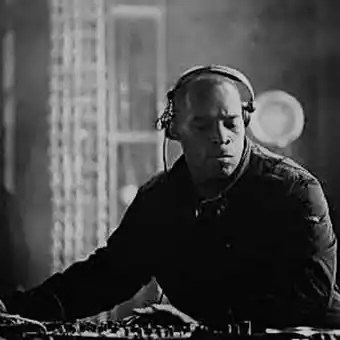 Kevin Saunderson — Origins
 Kevin Saunderson — archive video
Detroit bass into UK rave
Saunderson’s relevance to the UK archive runs through both crossover house and underground bass culture. Inner City records became part of the late-1980s British dance explosion, while the Reese bass moved into production practice across hardcore, jungle and drum & bass. That dual route makes his catalogue unusually important to understanding how Detroit ideas were absorbed and transformed in Britain.
