Armand Van Helden
Home-studio house with hip-hop instincts and jungle-sized bass — Armand Van Helden rebuilt remixes into new records and, almost by accident, handed UK speed garage part of its future sound.
House music with the bass turned sideways
Armand’s biggest influence often came from not respecting the borders around house music.
Armand Van Helden was born in Boston in 1970 and spent much of his childhood moving through Europe before returning to the United States. By the early 1990s he was DJing around Boston and making tracks at home, approaching house with as much interest in hip hop and breakbeat culture as in traditional club production.
He has described an unconventional route into production. Rather than spend years inside established studios, Armand preferred making music alone with modest equipment. Apart from an early professional-studio experience, the records were built at home. That isolation encouraged a raw style: simple parts, aggressive loops and sound choices driven by instinct rather than formal musicianship.
He has been refreshingly open about not being a trained keyboard player. That was never the point. One or two notes, the right loop and a bassline that hit properly could be enough. It is the same logic ravers understood instinctively: the tune does not need to impress a music teacher if the room goes off when the drop lands.
Early releases appeared through labels including Nervous, Strictly Rhythm, Henry Street and AV8, under his own name and aliases such as Deep Creed and the Banji Boys. The 1994 hit “Witch Doktor” established him internationally and suddenly turned a producer who had been mailing demos around New York into a touring DJ.
“The Funk Phenomena” followed, but the remixes made the deeper impact. Armand treated remix stems less like sacred material and more like a sample library. He would isolate one vocal, bass fragment or guitar part and construct an almost entirely new record around it.
That method reached its peak in 1996. His mixes of CJ Bolland’s “Sugar Is Sweeter,” Tori Amos’s “Professional Widow” and Sneaker Pimps’ “Spin Spin Sugar” pushed huge sub-bass and broken rhythmic ideas into house records. Armand has explicitly said he was listening to jungle and drum & bass and trying to imitate their bass weight and dramatic beatless breakdowns.
That is the rave connection in one move. He was hearing what UK breakbeat records did on a big system, then translating the pressure into New York house without pretending to make jungle. The kick could disappear, the bass could keep the room pinned and the remix could come back in harder than a straight four-to-the-floor arrangement expected.
The British effect was enormous. Producers in the emerging speed garage scene picked up the swung drums, dark bass and pitch-shifted vocal ideas. Armand did not single-handedly invent UK garage, but his remixes became part of the sound British producers were working from.
“Professional Widow” became a UK number one in its remix form. The transformation was extreme enough that listeners could easily miss how little it resembled Tori Amos’s original song. That was precisely the point: the remix had become its own piece of club music.
By 1999 “You Don’t Know Me”, featuring Duane Harden, gave Armand another huge crossover record. The same year he was famous enough to face Fatboy Slim in the deliberately ridiculous “A Date With Destiny” DJ battles, staged like boxing matches at Trentham Gardens and Brixton Academy. The spectacle says a lot about late-90s superstar-DJ culture, but the sets themselves remain rooted in weird house, hip hop and club tools.
Armand’s albums and later singles kept moving between house, rap, electro and pop. Rather than defend the prestige of one underground identity, he repeatedly disappeared into new production phases, sometimes returning with records that sounded deliberately simpler than what the industry expected.
The partnership with A-Trak as Duck Sauce brought another global chapter, including aNYway and Barbra Streisand. Again the method was sample-heavy, immediate and almost mischievously direct — qualities already present in his 1990s house records.
Armand Van Helden’s place in Rave Archive UK is therefore as a cross-border catalyst. New York house, hip hop, UK jungle, speed garage, big beat and later disco-house all pass through his catalogue because he treated genre as a record box rather than a set of walls.
Home studio to genre mutation
Home-studio beginnings
Early Strictly Rhythm-era work, aliases and raw New York house records establish a production method built around instinct, sampling and doing almost everything at home.
Witch Doktor & the touring break
Witch Doktor turns a producer who had largely been sending demos into an international booking name, while The Funk Phenomena confirms that the sound can travel far beyond one label circle.
The remix weapon
Sugar Is Sweeter, Professional Widow and Spin Spin Sugar use jungle-scale bass, beatless drops and radical stem reconstruction to push house toward what Britain will call speed garage.
You Don’t Know Me
The Duane Harden collaboration becomes a UK No.1 while the Fatboy Slim battles place Armand inside the late-90s superstar-DJ spectacle without changing the record-box mentality underneath it.
House without one uniform
Albums, remixes and singles keep shifting through rap, electro, disco and club house rather than settling into a prestige version of the 1990s sound.
Duck Sauce & the return of the obvious hook
Working with A-Trak as Duck Sauce brings aNYway and Barbra Streisand to a new generation, proving that the sample-heavy, mischievously direct instinct behind the early records never disappeared.
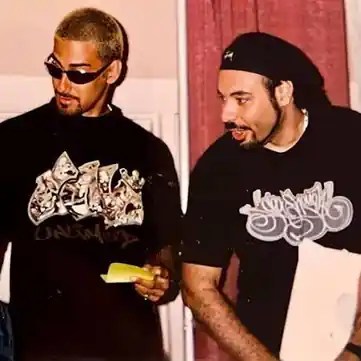
Armand Van Helden in frame
1995 to Glitterbox
A period club recording already preserved on Rave Archive UK’s Cream/Nation history page, placing Armand inside the mid-90s British superclub circuit before the 1996 remix run changed the wider sound.
Armand Van Helden live
 Armand Van Helden — Boiler Room Miami — 2024
Sometimes influence is an accident with consequences
Armand did not set out to create a British garage scene. He made weird, bass-heavy house remixes using lessons borrowed from jungle, and British producers heard possibilities inside them.
That circular exchange — American house listening to UK breakbeat culture, then influencing a new British house offshoot — is exactly the kind of cross-scene history Rave Archive exists to preserve.
