
Anne Savage
From early-90s free parties, Angels and ARK to Eastern Bloc, Tidy Girls and the hard-house explosion, Anne Savage’s career traces the point where northern rave culture hardened, accelerated and became a movement of its own.
From free parties to hard-house institution
Anne Savage did not arrive in the hard-house scene after it had been built. Her story starts earlier, when house, techno, rave and club culture still shared the same rooms and northern promoters could put radically different DJs on one bill.
Anne Savage came into dance music through the early-1990s rave and free-party network. Her own recollections place the turning point in the acid-house era, when tapes, clubs and all-night parties changed the direction of a musical life that had already included guitar-based bands and a broad appetite for alternative music.
The first major UK breakthrough came in 1993 with a residency at Angels in Burnley. Savage has remembered earning £25 for the slot but caring far more about the chance to play. The booth put her alongside visiting names including Carl Cox, Joey Beltram and Laurent Garnier, and the residency became the springboard into larger northern events.
A promoter from Leeds then brought her into ARK. Those line-ups capture an important period before dance music split into increasingly narrow genres: Anne could share bills with Sasha, Tony De Vit, Juan Atkins, Carl Cox, Graeme Park and others while still developing her own sound. She remained part of the ARK orbit as the club and rave landscape shifted through the middle of the decade.
At the same time she worked at Eastern Bloc Records, including as a buyer. That record-shop experience mattered. Instead of hearing only one scene’s records, she was exposed to house, techno, trance, breakbeat and the harder records arriving through specialist distribution. The shop was both workplace and research laboratory.
One of the decisive moments came in 1995 at a Fantazia versus ARK event in Leeds, where Savage played on the same bill as Tony De Vit. She later recalled being struck by music running roughly 10–15 BPM faster than what she was playing and carrying a completely different energy. As the Tripoli Trax and early Tidy sound gained ground, more hard house entered her box.
By the late 1990s that shift had become a full identity. Tidy Girls brought Anne together with Lisa Lashes, Lisa Pin-Up and Rachel Auburn. The original Tidy Girls EP was recorded in early 1999 and released that May; Savage has described the project as life-changing, arriving just as hard house exploded into a national club and festival movement.
Her own productions followed the same acceleration. Releases on Tidy and other hard-dance labels sat alongside an increasingly international DJ schedule, while compilations and long-form mixes helped fix the sound outside the club. I Need A Man, Hellraiser, collaborations with BK and later work under different aliases show that the production story was broader than a single Tidy moment.
In 2001 Radio 1 handed her an Essential Mix, a two-hour broadcast that caught Anne between the late-90s hard-house boom and the more techy, trance-edged direction the music was taking. She returned for another Essential Mix in 2005, by which point her sets had pushed deeper into hard dance and harder trance territory.
Television widened the audience again. Channel 4’s Faking It put Savage in the role of mentor, training classical cellist Sian Evans to pass as a club DJ. Anne has described a month of intensive daily practice, with beatmatching learned under pressure while cameras followed the process. Broadcast work later extended across BBC, MTV, Rapture, Sky One and Ministry of Sound Radio.
The club career never stopped at the UK border. Slinky, Sundissential, Tidy events, Ibiza clubs and international tours became recurring parts of the calendar, while Savage also used the Dumb Blonde alias to explore breaks, indie-dance and other material that sat outside what audiences expected from an Anne Savage hard-dance set.
Her current official biography still presents her as an active touring DJ and producer rather than a heritage act. It also documents a second strand of work around hearing protection and noise safety — a particularly relevant extension of a career spent for decades in loud club environments. That makes the later story less about looking back and more about what long-term dance culture asks of the people who work inside it.
Rave roots to Tidy Girls
Free-party education
Acid-house tapes, clubs and the free-party network pull Anne away from guitar-based music and toward the decks.
Angels, Burnley
A £25 residency becomes the first major platform, putting a new DJ into the same room as internationally recognised house and techno names.
ARK & Eastern Bloc
ARK gives Savage a major northern rave route while Eastern Bloc exposes her to records across house, techno, trance and the emerging harder sound.
Tony De Vit changes the temperature
Fantazia vs ARK provides a direct encounter with the faster hard-house energy that increasingly takes over her sets.
Tidy Girls
Anne Savage, Lisa Lashes, Lisa Pin-Up and Rachel Auburn become the original Tidy Girls as hard house moves from specialist clubs into a large national scene.
Essential Mix era
Two BBC Radio 1 Essential Mixes document the shift from turn-of-the-century hard house toward harder trance, techier grooves and a broader hard-dance identity.
Broadcasts, aliases & global circuit
Faking It, radio and television work sit alongside international touring, the Dumb Blonde alias and continued production.
Still active, with a second mission
Tour dates and new Tidy material continue while Savage also advocates for hearing protection and safer long-term working conditions in music.
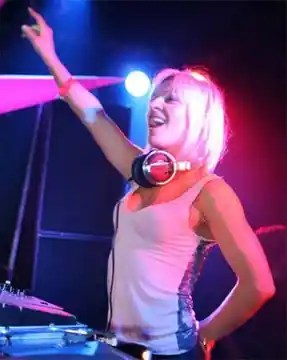
Anne Savage in frame
Archive photographs from the Rave Archive UK artist collection, including early booth and live-DJ images.


Radio 1 Essential Mix
No dedicated Rave Archive UK Anne Savage recording is currently indexed, so the audio route starts with the surviving 2001 BBC Radio 1 Essential Mix on Mixcloud.
Two hours from a key point in the hard-house timeline, moving across house, progressive, trance and the harder records that were defining Anne’s sets at the time.
Anne Savage on Rapture TV
Verified moving footage from Slinky at The Opera House in 2001. Multiple frames show the live television recording rather than audio over a static sleeve.
 Anne Savage — Rapture TV Live — Slinky at The Opera House — 2001
Why Anne Savage matters
Anne Savage connects several chapters that are too easily filed as separate scenes. The early residency belongs to the same broad rave ecosystem as Sasha, Carl Cox, Joey Beltram and Laurent Garnier. The ARK and Eastern Bloc years show the music beginning to specialise. The Tidy Girls period shows one of those specialist sounds — hard house — becoming a culture large enough to build its own stars, labels, weekender events and visual identity.
That route also makes her more than a token ‘female DJ’ entry. The historical point is longevity and crossover: resident, record-shop buyer, producer, compilation DJ, television mentor, radio presenter and international touring artist, all while the dominant sound around her changed repeatedly.
The later hearing-safety work adds another archive layer. Rave history is normally written around nights and records; Savage’s current advocacy asks what decades of those nights did to the people who stood beside large sound systems for a living.
